
What Is a Spreader Bar Used for and How to Use It?
Table of Contents:
- What is a spreader bar?
- How do spreader bars work?
- Spreader bar applications
- Choose the right spreader bar
- Adjustable spreader bars
- Basket-style spreader bars
- Lattice spreader bars
- Attach the load
- Position the bar
- Connect the spreader bar with the slings
- Commence lifting
- Disconnect the spreader bar
- Storage
- Ensure the high quality of your spreader bar or lifting beam
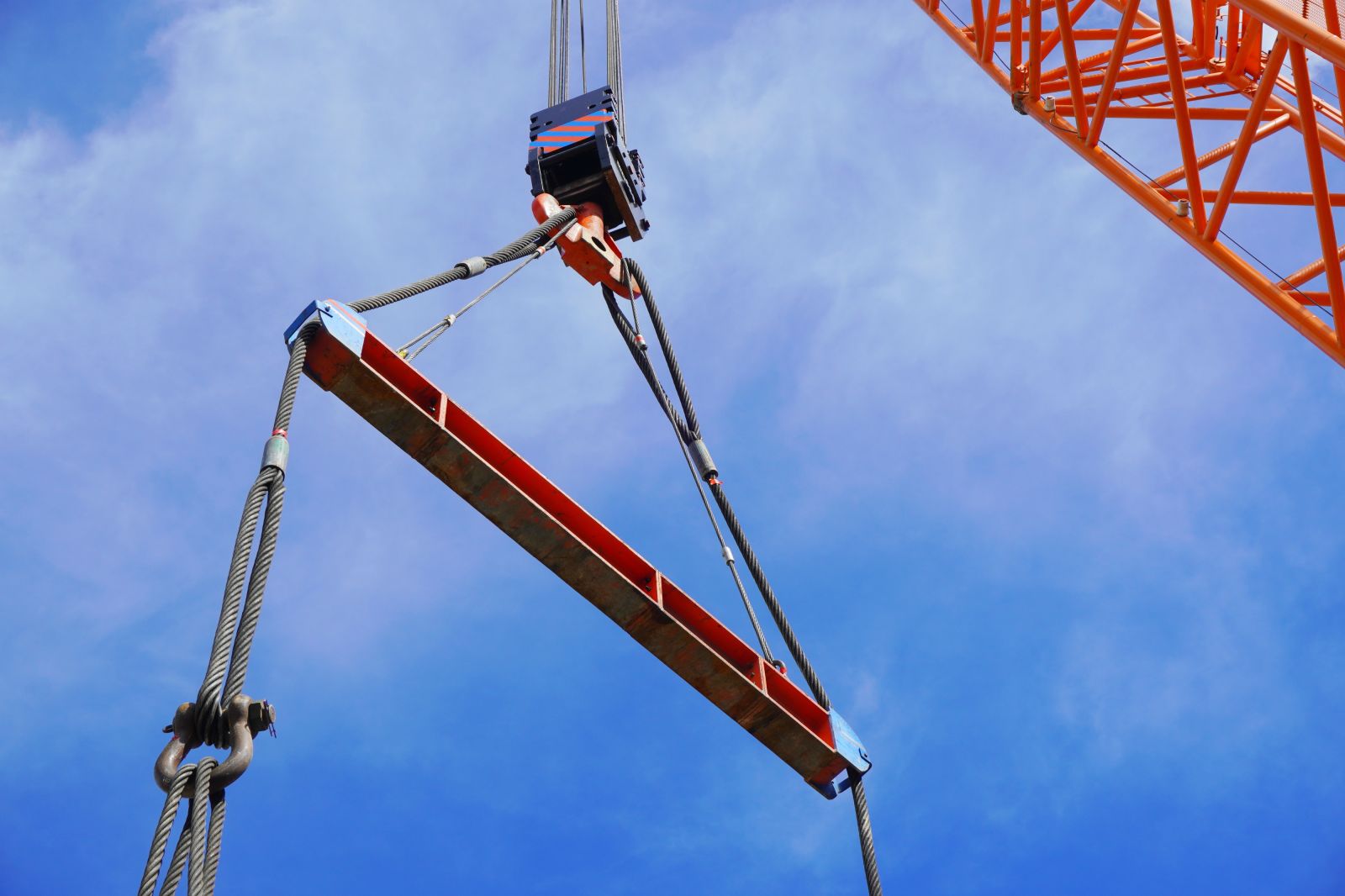
Table of Contents:
1.What is a spreader bar?
2.How do spreader bars work?
3.Spreader bar applications
4.How to safely use a spreader bar?
5.Ensure the high quality of your spreader bar or lifting beam
On construction sites, in mines, and everywhere where lifting large and heavy loads is as frequent as breathing, it isimperative to use an appropriate lifting device.Anyone who has ever worked on such sites will immediately think ofa spreader bar.And they will be correct as hardly any piece of equipment on the market can do the job better.
However, lifting heavy loads is not a walk in the park and one must knowhow to do it properly and most of all, safely.Today, we will dive into the ins and outs ofthe safe and efficient use of a spreader bar.
What is a spreader bar?
To start with, let us briefly introduce the piece of equipment to those unfamiliar with it. The purpose of a spreader bar isto provide an even weight distribution while lifting heavy objects.This steel (usually) tool can come in two forms:
- Fixed spreader bars, which serve well in lifting smaller objects.
- Adjustable spreader bars(combination lifting beams), which are used to lift larger objects.
Thanks tothe distribution of weightprovided by spreader bars, no bending or snapping when pressure occurs. It is also veryeasy to control the loadsandlift them stably and steadily.
How do spreader bars work?
Spreader bars consist ofa long bar with two single lifting pointslocated on opposite sides on top of it. The lifting points can connect to the lifting machine thanks tothe lifting slings. In the bottom part of the spreader bar, there aretwo or multiple lifting pointsthat can be connected to the load. Thanks to the even distribution of these points the spreader bar canprovide a steady, balanced, and controlled lift with no shifting. Spreader bars usually come in the form of round tubes or squares.
A significant advantage of using spreader bars is theirability to lift many loads at once.They also work great in the case of lighter loads. Thanks to their build, spreader bars save operators time as they canmake fewer tripswhile transporting various loads at once. That is what we calla real performance boost!
Spreader bar applications
Due to their extreme usefulness,many industries use spreader bars,especially those where the need to lift loads occurs regularly. These includemanufacturing, engineering, construction, and any other material-handling industries.Spreader bars are perfect for lifting loads and moving heavy objects (e.g., sheets of metal, beams, pipes) as well as lighter items, such as crates, or boxes.
How to safely use a spreader bar?
Even though the idea ofthe spreader bar operationseems straightforward, in reality, itrequires knowledge, appropriate skills, and experience.It is also advisable to use the correct technique to maximize the capacity of your lifting machine. Let's have a look at some general guidelines below.
Determine the load
Before any lifting can take place, the operator mustcarefully examine several aspects of the load,to choose the right type of spreading bar for the job. The factors that must be taken into consideration includethe material of the load, its weight, and dimensions.They also must determine the load lifting points and its center of gravity.
Choose the right spreader bar
Depending on the factors described above, the operator can nowselect the appropriate attachment,which will handle the load and allow them to perform balanced and safe lifts. What is the type of spreader bars an operator can choose from?
Adjustable spreader bars
Thanks to theirtelescopic mechanismthey can extend beyond their initial length.The longer the extension, the larger the loadadjustable spreader bar can lift. If you havevarying sizes of loadsin one project, using an adjustable spreader bar will be a perfect choice.
Basket-style spreader bars
They usually havefour attachment pointsdistributed evenlyon a square-shaped bar. Thanks to that the bar not onlydistributes the load evenlybut alsoincreases control and its stability.Basket-style spreader bars handle oversized loads with ease.
Lattice spreader bars
A lattice is a structure made of strips of metal that are linked together, leaving square spaces between them. Such built ensuresa rigid and stable lifting process.
The above types of spreader bars can also bemodular.This means the ability to assemble and disassemble them if necessary. Thanks to that the operator caneasilytransport and store the spreader bars. Modular bars are alsocustomizable, and strong.
Attach the load
The next step is toattach the identified lifting pointsto the spreader bar with the use of the right connectors. To attach the load, simply pass the lifting slings or hooks through the load's lifting points.
Position the bar
To ensure safety and maintain balance while lifting and carrying, the operator mustcenter and level the spreader bar.
Connect the spreader bar with the slings
The next step is toconnect the load to the spreaderbar by attaching the slings to the attachment points. Make sure that the slings you use areproperly sized and compatible with the load.Do not lift loads without conducting a security check first.Such checks must also be coordinated with all the members of the lifting crew to ensure a safe environment.
Commence lifting
The operator mustsmoothly and in a controlled way direct the crane and the spreader bar, avoiding sudden moves.which is below the cranes hook. The team assists in monitoring the lift, ensuring that a possible instability is caught early enough to notify the lift operator.
Once the load is in the desired location, the operator shouldslowly lowerit,maintaining stable and controlled movement.
Disconnect the spreader bar
Once your lifting task is complete, you can disconnect and disassemble the spreader bar. Make sure you leave the load on a stable surface and leave the area cleared.
If other lifting tasks need to be performed,modify an adjustable spreaderbar according to the new specifications, and repeat the whole process.
Storage
The lifting process does not finish once the lifting part is done. Proper use of the spreader bar includesthe ability to store it appropriately.Start with inspecting whether the spreader bar incurred anydamagethat may have affected its balance.
Clean the equipmentof debris, dirt, or moisture before you store it. You should also consider usingcorrosion protection.Storage should be in a clean and dry place,away from sunlight and temperature changes.
However, the most crucial factor isstoring the spreader bar horizontally.In that way, you can avoid bending or putting stress on the attachment points in the appropriate position. If you plan to store several spreader bars, ensure theydo not touch one another,as it may cause unnecessary stress.
Ensure the high quality of your spreader bar or lifting beam
Perhapsthe most important factorwhen it comes to using a spreader bar (or any other lifting equipment) isensuring its optimal condition.It can only be achieved if you purchase the equipment fromtrusted suppliers.Skidsteers.com offers you a range oftelehandler and forklift spreader bars made of American steelandwith high-quality precision.Moreover, we offeradvice and guidancein any aspect of your project. Get in touch to find out what else we can offer.